I recently read an article that asks a powerful question: “What if poetry can inspire action in ways that data cannot?” “Dear Human, Poetry Might Save Us from the Apocalypse“ an article in Nautilus magazine explores the work of Poets for Science, a group that unites artists, writers, and scientists to address climate change and conservation. We’ve known the facts about our planet’s condition for years, but the article points out that facts alone often aren’t enough to motivate people.
Poet David Hassler, one of the founders, says art helps us move from “what we know” to “what we feel.” Scientific reports explain what’s happening to forests, rivers, wildlife, and climate systems. Art and poetry let us actually feel these changes. They make the abstract real and tangible, something we can experience. Art doesn’t replace science, but it brings science into our hearts. That’s where real change begins.
What stood out to me in the article was Hassler’s idea of poetry as “the lichens of activism.” Just as lichens slowly turn rock into soil, a painting, poem, or song rarely changes the world overnight. Instead, they invite us to think, reflect, and question our assumptions. While the impact may be hard to measure right away, these small shifts can, over time, greatly influence our values, behavior, and culture.
Environmental art alone won’t change the world or stop climate change, but it can help build awareness, wonder, empathy, and care for nature. Every artwork that helps someone notice a wetland, love a bird, protect a forest, or feel connected to the living world adds to a larger cultural shift. Change begins with how we see things. Art can help us see the world differently and quietly support a society that values and protects nature.
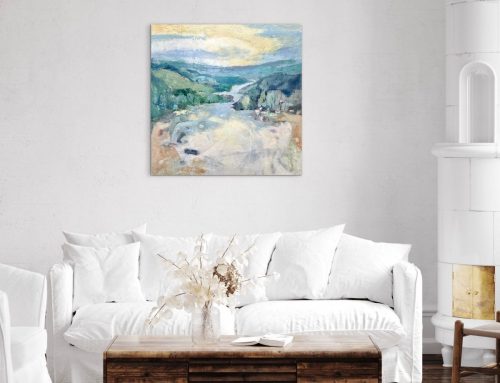
This idea is at the heart of my latest collection, What the Small Things Know. The paintings focus on the quiet, often overlooked survival strategies of tiny worlds found living on the forest floor, in the undergrowth, and in underwater habitats. In these small places, resilience, tenacity, adaptation, and community help life continue even in tough times. It’s a reminder that strength is rarely about the individual. To thrive, we need to be part of a community and a network. That’s the lesson in resilience, belonging, and care I hope to share with this coll ection.
You can view the collection by clicking HERE.
This article was inspired by “Dear Human, Poetry Might Save Us from the Apocalypse” by Paul Smaglik, published in Nautilus. Read the full article here.
[/fusion_text][/fusion_builder_column][/fusion_builder_row][/fusion_builder_container]